
A scammer can make an incoming call display your bank’s genuine phone number by falsifying the caller ID information associated with it. This is number spoofing. The digits can match the number printed on your card exactly, even though the person speaking has no connection to the bank. Chase explicitly warns customers about this technique in its bank impersonation guidance.
That does not, by itself, mean the bank’s systems have been breached. The deception can happen in the identity presented with the call. Your strongest response is to end the conversation and contact the bank through a route you independently select: its established app, or the number on your card or statement. Checking the incoming number while staying on the line leaves the central question unanswered: who is actually speaking?
A displayed identity has a limited job
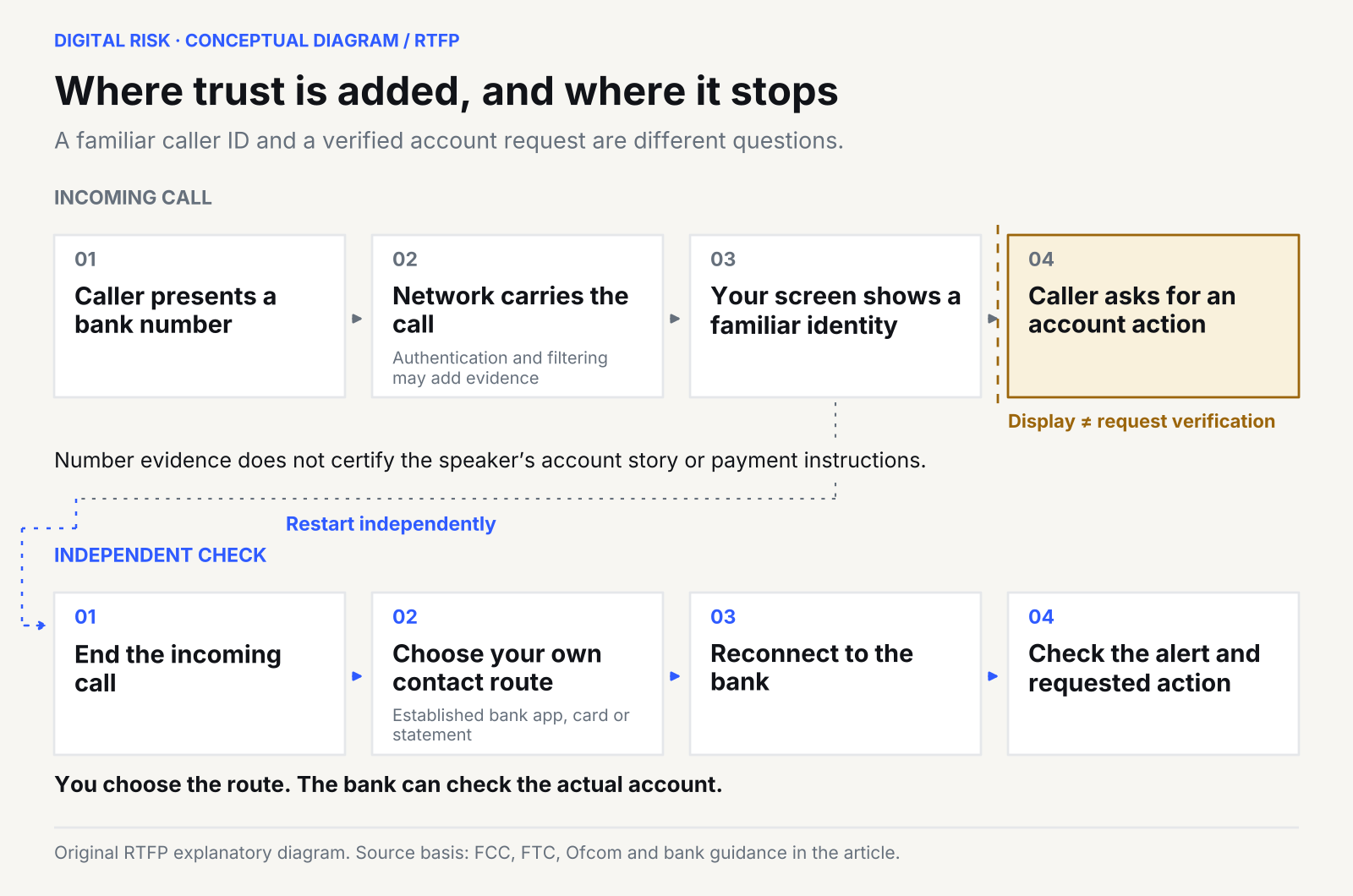
It helps to separate three questions. Which number does the screen display? What evidence connects this call to the organisation that uses that number? Is the action being requested legitimate?
An ordinary caller ID display cannot answer all three. A bank’s published number is public information. Finding the same digits on its genuine website confirms that the number belongs to the bank; it does not establish that this particular incoming call originated there. The FTC’s phone scam guidance, dated August 2023, warns that scammers can falsify both the number and the name shown on caller ID.
Think of the displayed number as a return address on an envelope. The address may identify a real building. You still need a reason to believe the letter came from its occupant. This analogy explains the gap without suggesting that telephone networks never check calls.
There are legitimate reasons for a displayed number to differ from an individual employee’s line. The FCC gives the example of a doctor displaying an office number when calling from a personal phone. Its consumer guide, reviewed July 18, 2024, distinguishes lawful uses from misleading caller ID used with fraudulent or harmful intent. Displaying a shared business number is not automatically evidence of wrongdoing.
Authentication helps, within its scope
Modern telephone networks do more than blindly repeat whatever they receive. In the United States, STIR/SHAKEN provides a framework for digitally signing caller ID information. Providers make different levels of attestation based on what they know about the customer and the right to use the displayed number. The FCC’s Call Authentication Trust Anchor rule, published August 19, 2025, describes those responsibilities and the role of digital certificates.
That is valuable evidence about a call, but its scope matters. Number authentication does not establish that the speaker’s explanation about your account is true or that a payment they request is appropriate. Even a genuine connection to a company leaves the transaction itself to be checked.
A displayed logo, business name or verification indicator should therefore be interpreted according to the service supplying it. Some services perform additional checks; a familiar image alone does not explain which checks occurred. Treat recognition as a prompt to assess the call, rather than permission to disclose credentials or move money.
The UK also uses network-level defences. Ofcom describes a Do Not Originate list covering numbers used to receive calls but never to make them, allowing providers to block apparent outbound calls from those numbers. Ofcom’s current consumer guidance nevertheless warns that some spoofed calls get through. Protection is useful without being universal.
What the screen actually establishes
| What you see or check | What it establishes | What it does not establish |
|---|---|---|
| The incoming digits match your card | The displayed number matches the bank’s published number | The bank placed this call |
| A familiar name or logo | The interface presents that identity | Which identity checks occurred, or whether the request is safe |
| A caller verification indicator | Evidence defined by that carrier or service | Blanket approval of the caller’s instructions |
| No spam warning | No warning is shown | A guarantee that the caller is legitimate |
The distinction is between the evidence a feature supplies and the much larger conclusion we may be tempted to draw from it.
The moment to change the conversation
Consider an explicitly hypothetical example. Your phone displays your bank’s name and number. A calm caller describes a suspicious payment and asks whether you recognise it. You do not. They say a code is about to arrive and ask you to read it aloud to cancel the problem.
The arrival of a genuine bank text can make the whole conversation feel authenticated. But the code might relate to a login or other account action. The FTC’s March 2024 explanation of verification-code scams describes how an impostor can persuade someone to hand over the extra factor protecting an account. A real message can be recruited into a false story.
Here, the useful decision is not whether the caller sounds professional. It is whether to let an unverified incoming caller direct an account action. You can say, “I’ll contact the bank myself,” then end the call. Do not share a login code, approve an unexpected authentication request, or make a transfer while the caller supplies the explanation.
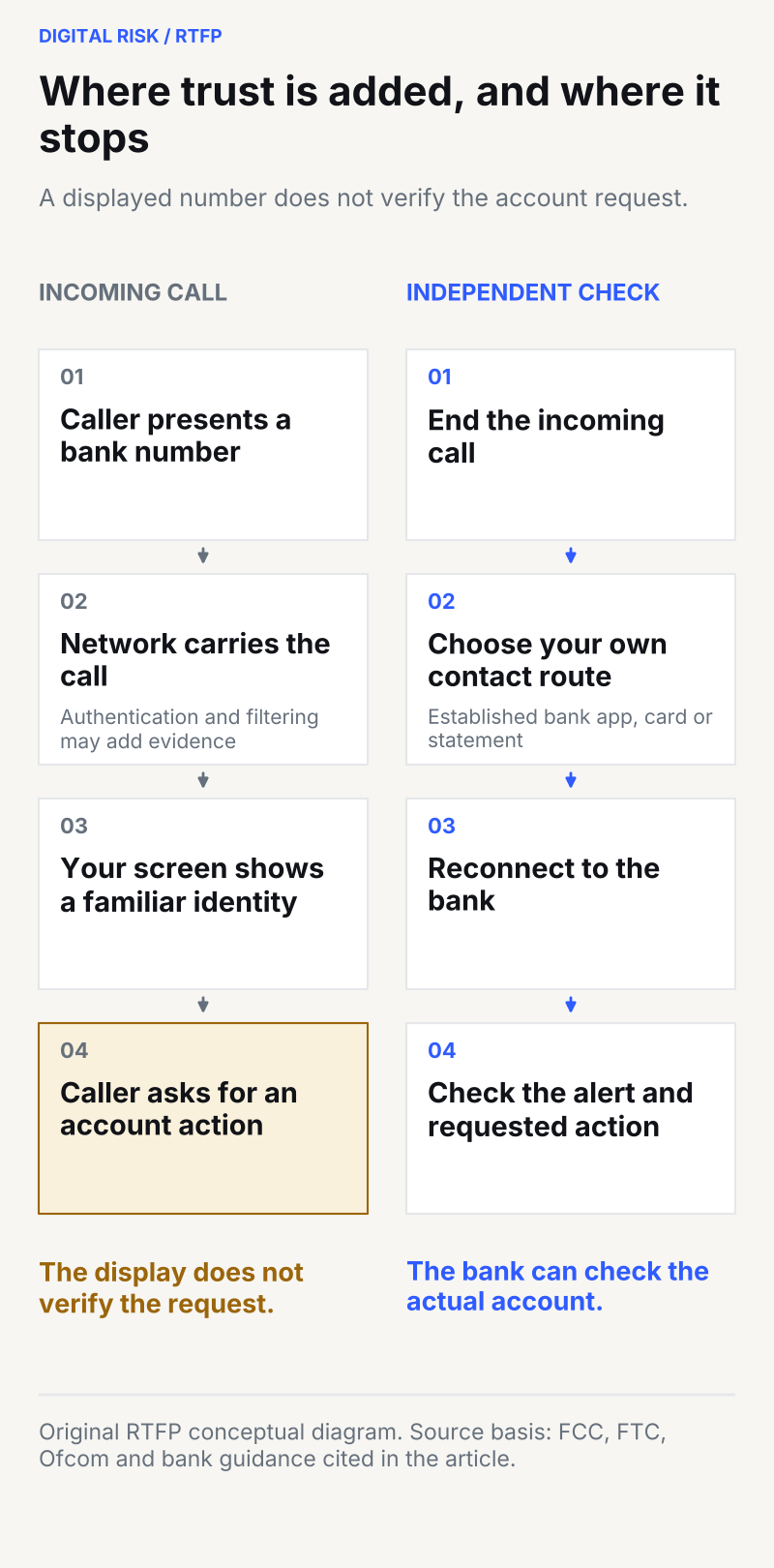
Open the bank app yourself, or enter the number from your card or statement. Avoid a supplied link, a number dictated by the caller, or simply redialling the recent call. Chase specifically advises an independently sourced callback. Ask whether there is a genuine alert and what action the bank requires. You have changed who controls the route into the conversation.
When the number makes you suspect a breach
Spoofing and compromise are different events. Spoofing misrepresents the identity attached to a call. Compromise means someone gained unauthorised access to a system or account. Seeing a bank number establishes neither that the bank was hacked nor that your own account is secure.
Avoid both leaps. A spoofed call may be an attempt to obtain the access the criminal does not yet have. There could also be a separate account problem. An independently initiated conversation lets the bank examine your actual account instead of letting the caller’s story define the evidence.
If you already disclosed information or sent money, tell the bank promptly through a trusted channel. Explain precisely what you shared or approved and when. Preserve the call time, displayed number and related messages. Chase’s security centre stresses prompt reporting and makes clear that recovery depends on the circumstances. No caller-ID explanation can promise a refund.
The responsibility also belongs to companies
For banks and other businesses, this suggests a practical service-design test: can a cautious customer end an outbound call and resume the issue through an established channel without losing the thread?
Companies should make that path ordinary. Clear records, retrievable case references and staff who welcome independent callbacks reduce the pressure to trust a screen. A reference should help locate an issue after reconnection; it should never become another supposed proof supplied by an unknown caller.
The enduring rule is simple: use the display to recognise a claimed identity, then use an independently chosen channel to establish contact and verify the requested action. Those are separate steps, and keeping them separate is what makes the defence work.