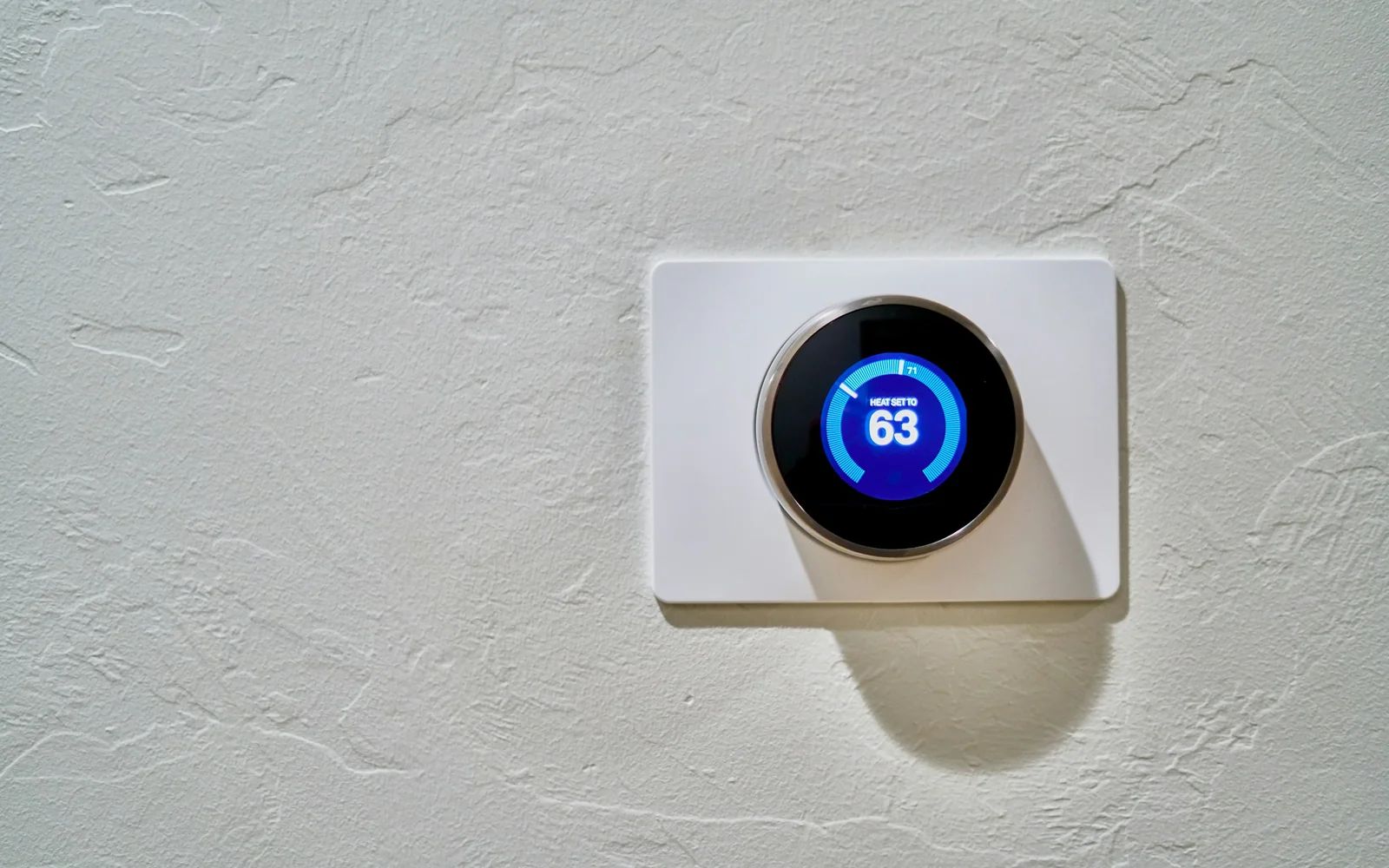
A thermostat is still attached to the wall. Its display lights up. Its controls respond. Yet the phone app that made it convenient no longer reaches it.
Who decided the product was finished?
For a connected device, the manufacturer or service operator can end important functions by withdrawing software maintenance, app compatibility or cloud access. Owning the physical object does not give its owner control over that supporting infrastructure. But the result depends on how the device was built: losing support can mean fewer features, increasing security risk or a much more complete loss of usefulness.
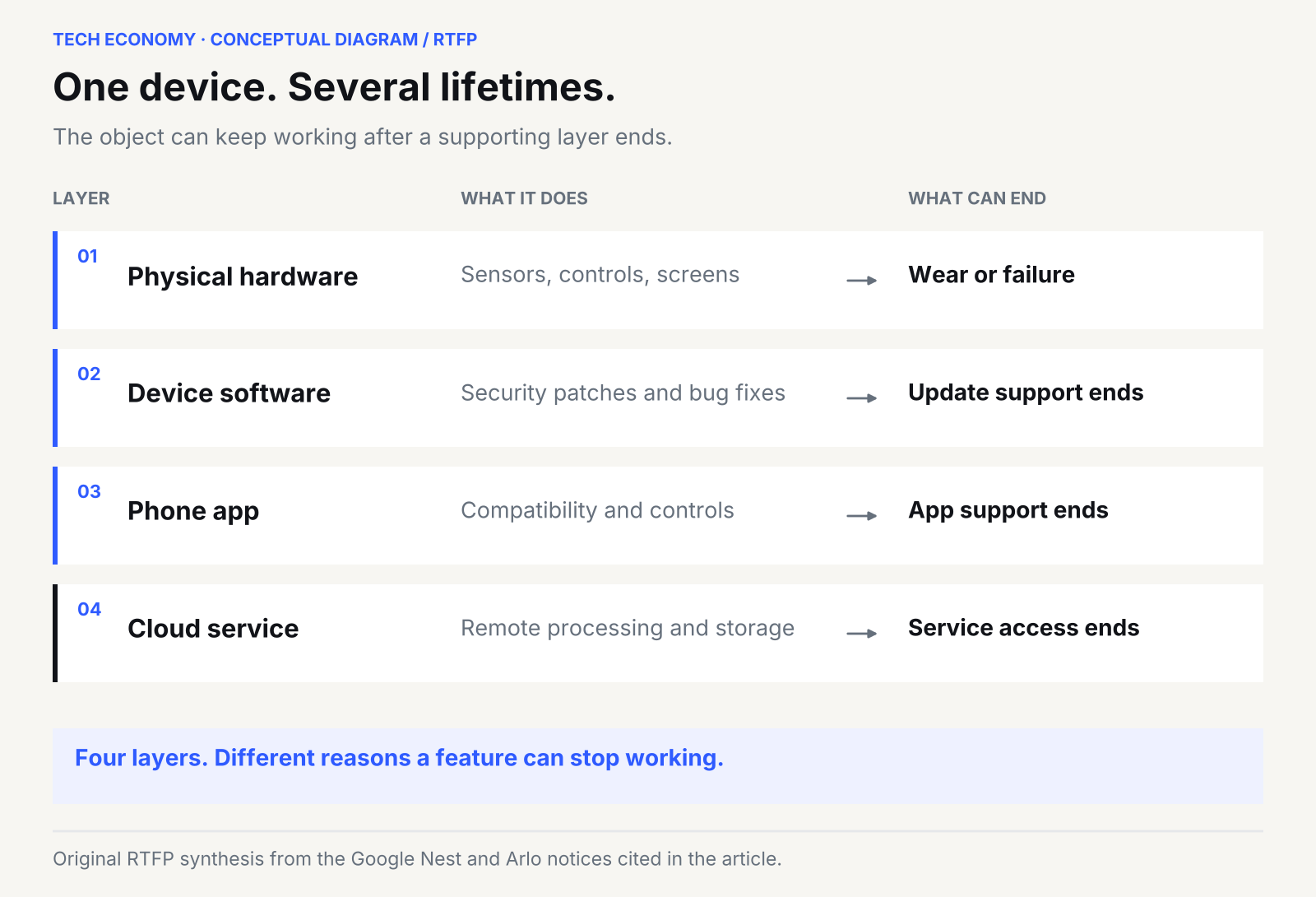
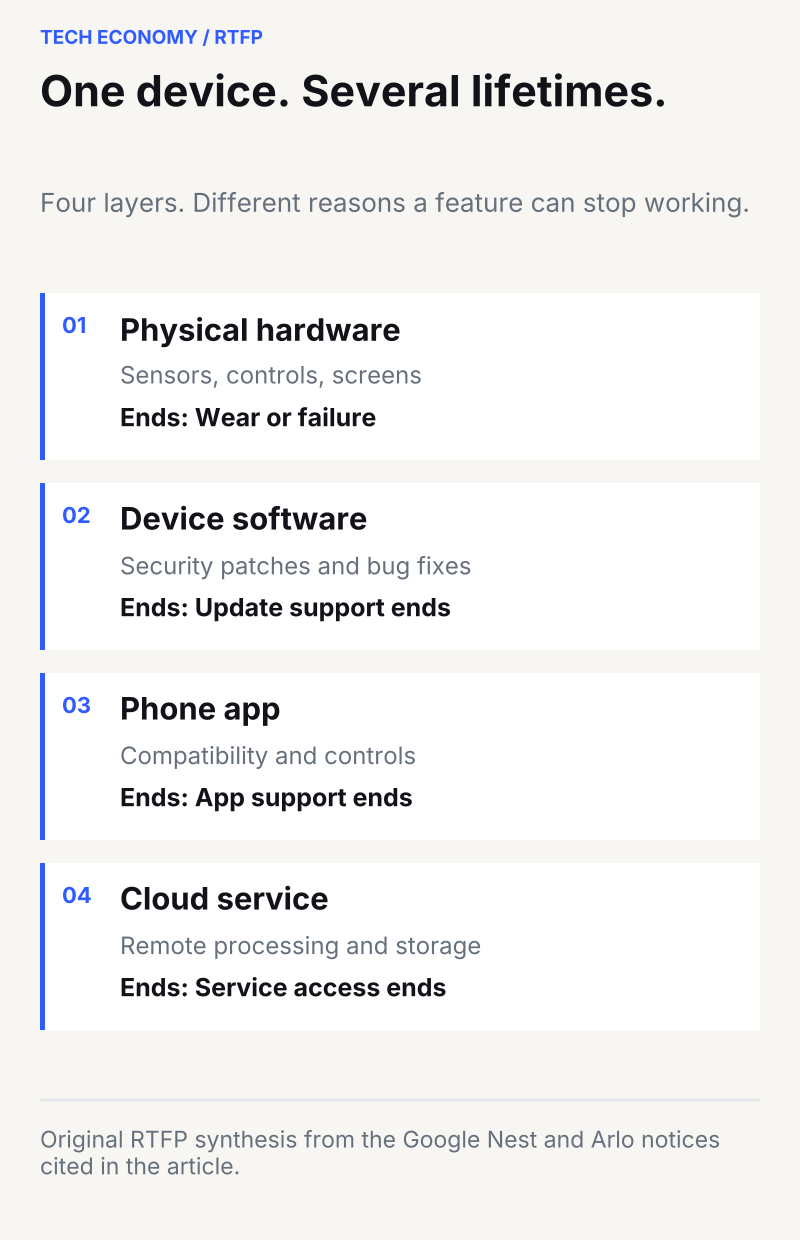
The crucial question is which part of the product has reached its end. A smart device has several clocks, and they rarely stop together.
A working thermostat with a shorter feature list
Google ended support for first- and second-generation Nest Learning Thermostats, including the second-generation European version, on October 25, 2025. Those devices lost Nest and Google Home app connections, remote control and connected features. Software and security updates also ended.
The equipment could still perform its central household job. Google says owners can operate the thermostat directly, change modes and manage on-device settings; existing schedules continue. One consequential loss is the connection to Nest Protect: the associated emergency shut-off feature no longer runs. These details apply to the specified older models, not every Nest thermostat. Google’s end-of-support notice
This is an awkward kind of ageing. The heating control remains useful, while the convenience someone paid extra for has diminished. Replacing it may restore remote features but also means buying and possibly installing hardware whose predecessor still functions.
“Working” becomes a disagreement about the product’s purpose. Someone who adjusts the temperature at the wall may be satisfied. Someone managing an empty property from another city may have lost the reason they bought it.
Four lifetimes inside one purchase
The physical layer includes sensors, screens, motors and circuit boards. It can fail through wear or damage. The software running on the device is another layer; security patches address vulnerabilities, while other updates repair bugs or add capabilities.
The phone app has its own dependencies. It must remain compatible with the phone’s operating system and whatever services it contacts. A working app can still lose access to a retired service. Conversely, a device with local controls may remain usable even when its companion app disappears.
Cloud features are work performed elsewhere: storing video, processing requests or relaying commands over the internet. Keeping the hardware powered cannot keep a remote server available. That distinction explains why “end of support” is too vague to describe the outcome on its own.
What actually survives?
Arlo offers a different outcome. Its current end-of-life FAQ says existing registered owners can retain live viewing, motion notifications and local recording with a compatible SmartHub or Base Station. Applicable devices retain their included seven-day cloud storage. Ordinary firmware development ends, while critical security updates continue for one year beyond hardware EOL. Its hardware policy excludes the EU and UK; service policies apply globally. Arlo’s end-of-life FAQ
| What ends | Example or condition | What remains, and what does not |
|---|---|---|
| App connection and connected features | Specified first- and second-generation Nest Learning Thermostats, October 25, 2025 | Direct controls and existing schedules remain; remote app control and listed connected features end. |
| Software and security updates | The same affected Nest models | Physical operation continues under Google’s notice, without further software or security updates. |
| Routine firmware development at hardware EOL | Arlo’s policy for applicable EOL devices | Specified functions can remain; critical security updates have a separate one-year extension. Continued recording depends on the device, storage setup and applicable service. |
| Physical hardware operation | General distinction, not a claim about either manufacturer | Software support cannot make a broken sensor or failed power supply function; repair and replacement are separate questions. |
Source scope: Google’s notice and Arlo’s current FAQ, checked October 5, 2026. Retaining local recording does not establish that every setup works wholly offline or without an account.
The sale happens once. The work keeps arriving.
A conventional hardware transaction is easy to picture: a company builds an object and collects a payment. Connected products extend the relationship. Someone must operate infrastructure, maintain software, investigate vulnerabilities and help users long after the box leaves the shop.
Arlo’s 2025 annual report makes those costs concrete. It identifies personnel, data storage, security and computing among the expenses of running its cloud platform. It reported $316.4 million in subscriptions and services revenue, compared with $212.9 million in product revenue, for the year ended December 31, 2025. The company also described promotional hardware pricing intended to increase household acquisition and subscriber growth. Arlo’s 2025 annual report
The broader economic tension follows from that structure. A one-time price has to help fund an uncertain period of service, or the business needs another continuing source of money. Subscriptions can finance that obligation, but paying regularly does not itself guarantee support for a particular model forever.
Supporting older equipment also creates work that does not disappear merely because storage becomes cheaper. A change must be tested against devices already in homes. Older hardware may constrain what software can do. Keeping several generations running can require maintaining several technical paths.
None of this establishes that a particular shutdown was inevitable, or that a manufacturer deliberately designed a product to fail. It explains why longevity is a business commitment as well as an engineering property. The decision to keep serving an old device competes with other uses of people and money.
The missing specification is time
In research published November 26, 2024, FTC staff examined 184 connected products. The report found that 163 product webpages, or 88.6%, did not disclose a support duration or end date. Separate, time-limited Google searches still failed to find support information for 124 products.
This was a disclosure study, not a finding that 89% of all smart devices would stop working early. Staff used three-minute searches to approximate an ordinary buyer’s effort. The report also raised possible consumer-protection issues depending on the facts; it did not establish a universal right to indefinite updates. FTC staff report on smart-device support
The economic problem is straightforward: a feature’s duration changes its value. Imagine two otherwise identical $200 devices whose connected features last two years and eight years. Ignoring subscriptions, repairs and the remaining value of offline functions, the hardware cost per connected year is $100 versus $25. This is an illustration, not a forecast, but it shows why a missing support date can matter more than a small discount.
What ownership needs to include
For users, the meaningful outcome is a dependable minimum product after services end. Keeping useful local controls gives the object residual value. Preserving an app icon without its essential service does not.
For companies, a credible support period makes the future obligation explicit. It encourages the sale price, subscription plan and technical design to account for maintaining devices already sold. A practical retirement plan can preserve customer trust even when indefinite support is unrealistic.
For investors, recurring service revenue deserves to be read alongside the cost of serving the installed base and the promises made to it. More devices in homes can create future customers and future work. Sales growth alone cannot tell which relationship will dominate.
The lasting change is that a smart-device purchase buys participation in an operating system of people, software and infrastructure. The object may belong to you, while someone else controls the continued supply of an important part of its usefulness. A durable product needs an answer for what happens when that supply ends.
_027.png)