
No. A bank charter does not make your crypto FDIC-insured. That matters after a community banking group sued the federal regulator that approves national trust banks on October 2. The case challenges how crypto businesses are entering the banking system. It does not change which assets deposit insurance covers. ICBA’s filed complaint · FDIC deposit insurance guidance
Imagine opening an app with two balances: dollars waiting to be spent and bitcoin you bought. They sit beside each other on screen. Behind the screen, they can have very different protections. The dollars might be deposited at an insured partner bank, subject to coverage requirements. The bitcoin is not FDIC-insured. Putting both under a company with “bank” in its name does not erase that difference. FDIC: banking with third-party apps
This October 5 analysis explains what the lawsuit means and where the protection actually stops.
What happened on October 2?
The Independent Community Bankers of America, or ICBA, sued the Office of the Comptroller of the Currency and its chief, Jonathan Gould, in federal court in Washington, D.C.
The group challenges the OCC’s 2026 chartering rule, a 2021 interpretation and a Protego-related approval. It argues the agency is letting businesses use trust bank charters for activities beyond what Congress allowed. ICBA says this exposes customers to risk and leaves community banks competing under tougher requirements. It wants the court to undo the challenged actions and restrict future approvals based on those policies. These are allegations and requested remedies, not court findings. The complaint
The OCC’s published explanation takes the opposite view: it says the rule clarifies authority the agency already had, without expanding or shrinking it. The rule took effect April 1. OCC’s rule summary
What does a charter actually do?
A charter gives a business a particular banking status and puts it under the rules and supervision that come with that status. It can matter a great deal. But it does not promise that every product the business offers is insured.
Consider National Digital Trust Company, a proposed subsidiary of Protego Holdings. The OCC gave it preliminary conditional approval on February 13, 2026. The decision sets capital and liquidity requirements, restricts changes to its business plan, requires compliance controls and calls for a preopening examination. It explicitly says final permission to begin business depends on meeting the preopening requirements. The OCC’s 2026 decision
So “uninsured” does not mean there is no regulator watching. And “conditionally approved” does not mean every step is finished.
The category matters, too. The OCC says most national trust banks are uninsured, but some accept deposits and have FDIC insurance. A trust bank’s name alone cannot tell you which arrangement applies. The published chartering rule
Two protections, two different jobs
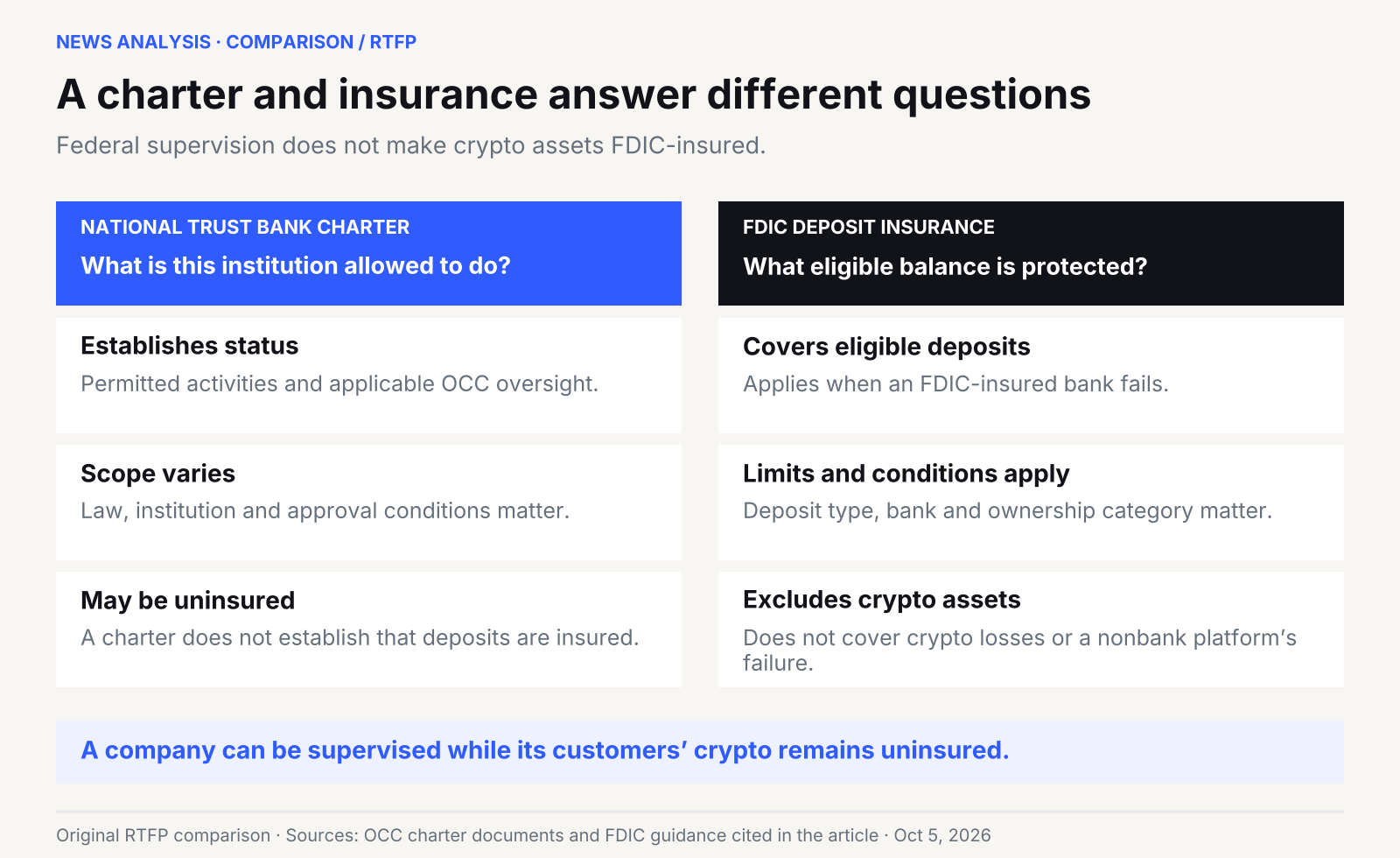
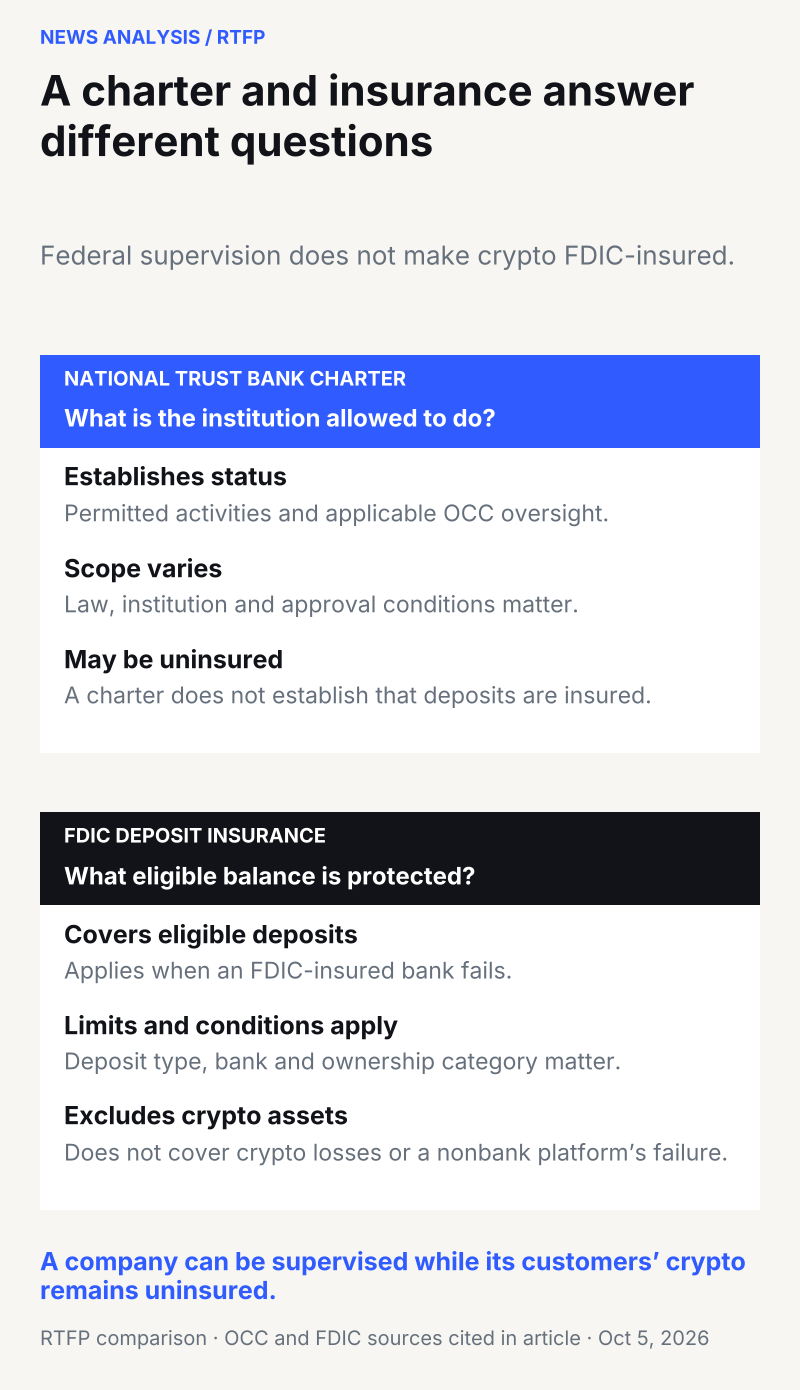
| Federal national trust bank charter | FDIC deposit insurance |
|---|---|
| Sets the institution’s banking status, permitted activities and applicable OCC oversight. | Protects eligible deposits when an FDIC-insured bank fails. |
| Comes with rules and conditions specific to the institution and its business. | Depends on the deposit, insured bank, ownership category and coverage limits. |
| Can apply to a business that does not offer insured deposits. | Does not cover crypto assets, investment losses or a nonbank platform’s bankruptcy. |
| A preliminary approval can leave requirements to complete before opening. | An insurance claim needs to name the covered product and bank, not just the app. |
RTFP comparison based on the OCC documents above and the FDIC’s crypto fact sheet and coverage guidance.
Even the dollars need a closer look
Return to that app. A statement that it “works with an FDIC-insured bank” leaves an important gap: where are your dollars right now?
The FDIC says money sent to a nonbank is not eligible for deposit insurance until it reaches an insured bank and other requirements are met. Coverage through an intermediary, called pass-through insurance, depends partly on records showing who owns the money and each person’s share. The FDIC recommends identifying the actual bank and checking its insured status with BankFind. FDIC’s app guidance
There is another boundary: insurance responds to the insured bank failing. It does not cover a nonbank exchange or wallet provider going bankrupt, crypto theft, or a token losing value. An insured cash arrangement does not extend coverage to the bitcoin beside it. FDIC’s crypto fact sheet
Extra context: the legal argument and the dates
The dispute turns partly on “fiduciary” activities: legally defined roles and responsibilities toward a client. The OCC’s 2021 interpretation says trust-company business can also include non-fiduciary services, such as certain custody arrangements. ICBA challenges that reading. The technical question is how much business the trust charter can cover. OCC Interpretive Letter 1176
Protego’s history also needs care:
- January 11, 2021: The OCC issued Interpretive Letter 1176.
- February 4, 2021: The OCC issued Protego’s conditional conversion approval.
- February 4, 2023: That application’s time expired, as recorded in the OCC’s later bulletin, page 13.
- February 13, 2026: The OCC preliminarily conditionally approved National Digital Trust Company, the proposed Protego Holdings subsidiary.
- March 2, 2026: The chartering rule appeared in the Federal Register.
- April 1, 2026: The rule’s stated effective date.
- October 2, 2026: ICBA filed case 1:26-cv-03441.
The complaint cites 2021 paperwork in paragraph 14 and describes a February 2026 approval in paragraph 65. Those references should not be conflated. Neither conditional decision, by itself, establishes final operating authorization today. Filed complaint
What this means for you, companies and investors
For customers: the protection follows the particular balance and legal arrangement. Federal supervision can be meaningful while your crypto remains uninsured. The useful detail in a provider’s disclosure is which product is covered, by which bank, and against which event.
For companies: a court order restricting this framework could change applications, planned services or business structures. How much would depend on the order’s scope. The filing alone does not undo every existing charter.
For investors: approval stage matters when assessing a company’s progress. A conditional decision can leave work, costs and operating limits ahead. A charter announcement also says nothing by itself about what a token should be worth.
The question to carry away is simple: what protects this specific balance? “Bank” on the company’s website is only the beginning of the answer.